
Instant Calming Techniques: Activating the Vagus Nerve
Instant Calming Techniques: Activating the Vagus Nerve
Your body has a built-in reset button. It’s called the vagus nerve, and learning to activate it gives you immediate access to calm, no matter what’s happening around you.
The vagus nerve is the longest cranial nerve in your body. It connects your brain to your heart, lungs, digestive system, and more. When you activate it, you signal your nervous system to shift out of fight-or-flight and into rest-and-digest mode.
These four techniques activate your vagus nerve in seconds. No apps, no equipment, just your body doing what it’s designed to do.
“Chill Out”: Cold Water Activation
Cold water on your face triggers what’s called the “dive reflex.” Your body thinks you’re diving underwater, so it automatically slows your heart rate and calms your nervous system.
Splash cold water on your face, or hold a cold washcloth on your forehead and cheeks for 30 seconds. If you’re really stressed, try a cold shower. The cold activates the vagus nerve immediately, bringing your body out of panic and into regulation.
Why it works: Cold temperature stimulates the vagus nerve directly, shifting you from sympathetic (stress) to parasympathetic (calm) in under a minute.
Make Some Noise: Vocal Cord Activation
Your vagus nerve runs through your vocal cords. When you hum, chant, sing, or even gargle water, you’re physically stimulating the nerve.
Try humming a simple tune for 2-3 minutes. Or chant “om” if that feels comfortable. Even gargling water works. The vibration activates the vagus nerve and signals your body to calm down.
Why it works: The mechanical vibration of your vocal cords directly stimulates the vagus nerve. The louder and longer you sustain the sound, the more activation you get.
Tummy Breathing: Diaphragmatic Breathing
When you’re stressed, your breathing moves up into your chest. Short, shallow breaths. This keeps your nervous system in fight-or-flight.
Diaphragmatic breathing (belly breathing) does the opposite. Place one hand on your belly. Breathe in slowly through your nose, letting your belly rise. Exhale slowly, letting your belly fall. Do this for 5-10 breaths.
Why it works: Deep belly breathing activates the vagus nerve by engaging your diaphragm. This signals safety to your nervous system and shifts you out of stress response.
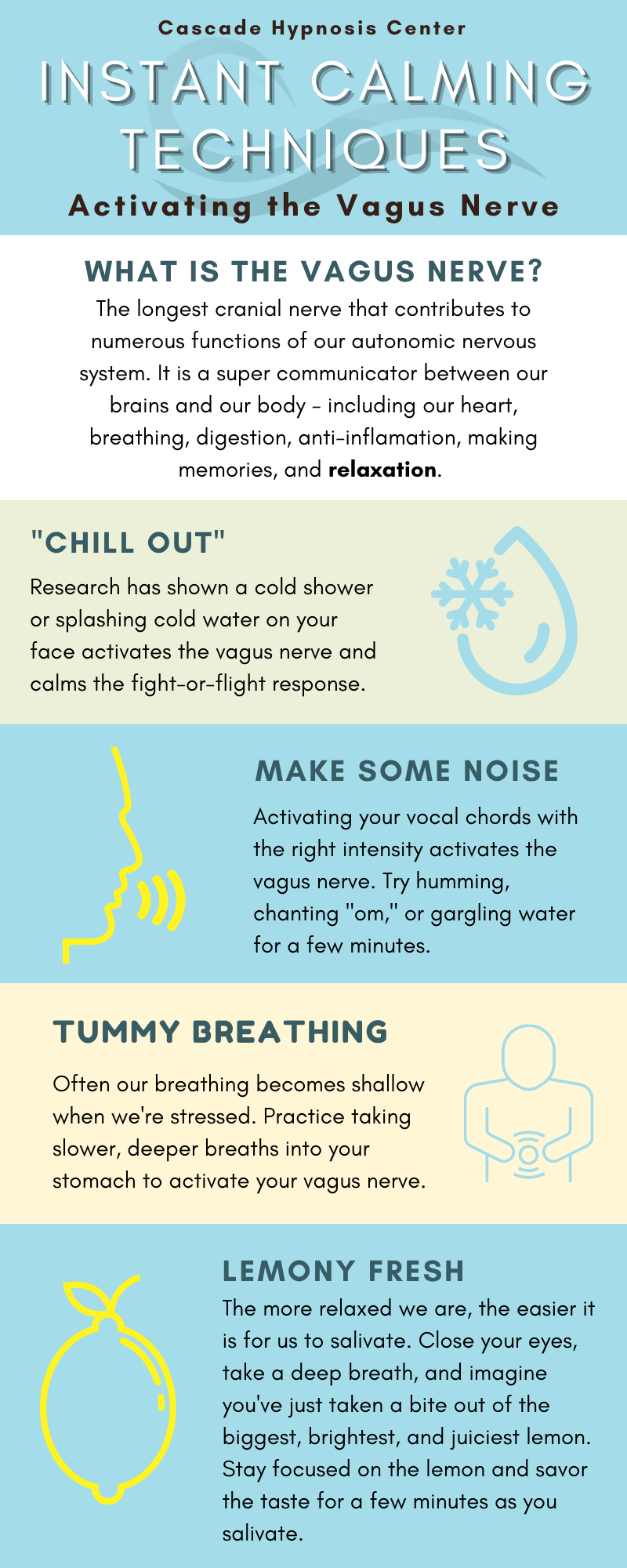
Lemony Fresh: Salivation Activation
The more relaxed you are, the easier it is to salivate. When you’re stressed, your mouth goes dry. This works in reverse too: stimulating salivation tells your body you’re safe enough to digest, which activates the vagus nerve.
Close your eyes. Take a deep breath. Imagine biting into the biggest, brightest, juiciest lemon you’ve ever seen. Feel the juice. Taste the sour. Let yourself salivate. Stay with the image for 1-2 minutes.
Why it works: Salivation is part of the parasympathetic (rest-and-digest) system. When you activate it consciously, you signal to your body that it’s safe to relax.
Using These Techniques Daily
These aren’t just for emergencies. The more you practice vagus nerve activation when you’re calm, the easier it is to access when you’re stressed.
Try one technique every morning. Or use them throughout the day as mini-resets. Cold water when you wake up. Humming in the car. Belly breathing before bed. Build the pathway, so your nervous system knows how to get back to calm.
How This Connects to Hypnosis
In hypnosis, we use these same principles to help you regulate your nervous system. When your body feels safe, your mind can do deeper work. These techniques give you tools to calm yourself outside of sessions, so you’re not dependent on willpower or distraction.
You’re teaching your body that it knows how to return to calm. And the more you practice, the faster it happens.